Fake Grass in Fortitude Valley for Courtyards and Small Yards
Tired of bare concrete or a muddy courtyard? Fake grass in Fortitude Valley can give you a green space with no mowing.
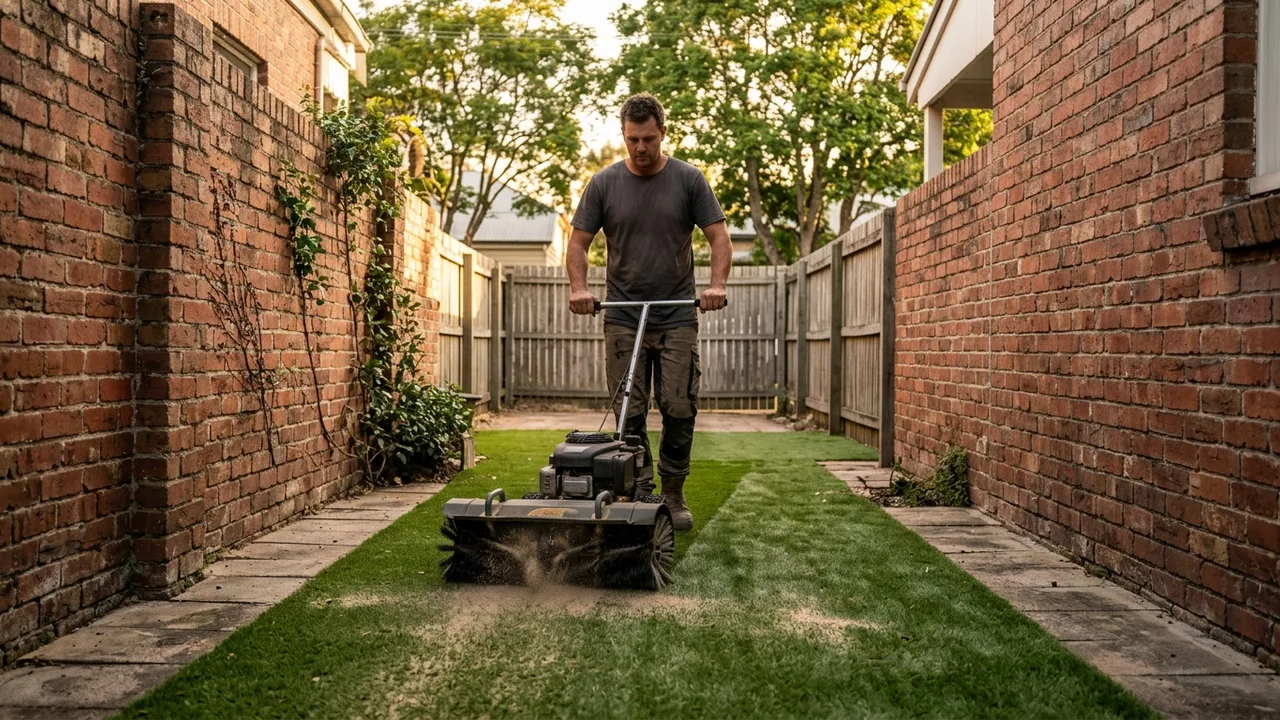
Yes, you can usually turn a courtyard green with artificial grass in Fortitude Valley 4006, as long as the surface underneath is sound and water can get away. That applies to old concrete, tired pavers and patches of dirt, though each one is prepared differently. The result to aim for is a flat, tidy area you can use soon after rain. Your installer measures the space, looks at how it drains and confirms what the base needs before any turf goes down.
Fake grass in Fortitude Valley: courtyards, decks and small yards
A small outdoor area can look finished with synthetic turf, but the details show more than they would on a big lawn. A crooked join or a lifting edge sits right beside your back door, so cutting and fixing matter.
Shade is one reason people give up on natural grass. Walls, fences and neighbouring buildings can block the sun for much of the day, leaving thin growth and mud. Synthetic turf needs no sunlight or watering, so a dim corner can stay as green as the open part.
Balconies and rooftop areas need extra care. Many have a waterproof layer under the surface, and fixings must not pierce it. The turf also has to leave drain outlets clear and easy to reach. Your installer looks at what is there and chooses a way of laying that suits it.
Access shapes the job too. If rolls and base material have to come through a hallway, up stairs or along a narrow path, handling takes longer.
What goes under turf on concrete or soil
The base decides whether your turf stays flat and drains well. On concrete or pavers, the surface needs to be firm and shed water. Low spots that hold puddles are corrected first, because turf will not hide them. A thin underlay can soften the feel underfoot and help water move sideways.
Soil takes more work. The installer removes old grass and roots, shapes the ground so it falls away from the house, then compacts a layer of crushed rock. Compacting means pressing it down hard so it does not sink later. A fine top layer gives a smooth bed for the turf.
Clay deserves a close look because it soaks up water slowly. Rain may need a graded path to a drain or garden bed instead of relying on the ground below.
Picking turf for dogs, kids and full sun
The right turf depends on how you use the space. For a dog, drainage through the backing comes first, along with a base that rinses clean and does not trap smell. Hosing and picking up waste are still part of the routine.
Children may do better with a softer pile, which is the height and thickness of the blades. Under play equipment, padding may be needed beneath the turf, and the installer can say which product suits that use.
Heat is a fair worry in Brisbane. Synthetic turf gets warm in direct sun, often warmer than living grass. Shade, lighter infill and the blade design can all affect how it feels. Infill is the sand or granules brushed between the blades. Looking at a sample outside in the sun tells you more than a photo in a catalogue.
Fading is the other concern. A product made with UV protection is built to hold its colour better outdoors, and the warranty terms show what the maker covers.
What your turf quote covers
A useful quote sets out the turf product, the removal of what is there now, the base materials, drainage, edging and laying. Seeing those as separate items shows where your money goes and makes two prices easier to judge. A very low figure may leave out base work, which is the part you cannot see once the job is done.
Doing it yourself can work on a small, level slab if you are confident cutting and joining turf. Soil, slopes and poor drainage are harder to get right, and mistakes usually mean lifting the turf again.
Before you sign, type the installer's name or licence number into the QBCC (Queensland Building and Construction Commission) licensee register and check it matches the business on your courtyard quote.
How Fortitude Valley homes and slopes affect the job
Older housing, hilly ground and a working past can all change what an installer finds under your feet. The starting point is your own block, because a workers' cottage yard and a paved unit courtyard need different preparation.
The suburb grew partly as a place for workers to live close to the business heart of Brisbane. A rare surviving cluster of their cottages, dating from the late 1800s and early 1900s, stands in the Prospect Street precinct. If your home is of that age, the yard may hold old paving, buried rubble or drainage that has shifted over the years. A tight side path can also mean moving materials by hand.
Hills are part of the local story. Early Fortitude Valley was separated from Brisbane by hilly ground, including Duncans Hill on Ann Street, where All Hallows College now stands. If your own block near Ann Street steps down or tilts towards a back wall, the base has to steer rain away from that wall and your doors. A steeper section may also need a retaining edge to hold the layers in place.
The Valley also has an industrial past, which you can see in the 1936 Trails Ltd Ice and Cold Stores building on Bridge Street. A courtyard on a former work site may sit on an old slab instead of soil. Your installer checks its cracks, levels and drain outlets before deciding whether to lay over it.
A unit courtyard near Chinatown that is paved from wall to wall needs its rainwater outlet kept clear under the new turf. For your own space, add the rough size, the current surface, the route in and any spots where rain pools to your message, then request your turf quote.
Services in Fortitude Valley
- Play area and school turf Play turf for backyards, schools and childcare, with a shock pad under swings and climbing gear.
- Artificial grass on concrete Concrete patios, courtyards and balconies covered in turf that drains with the slab and stays fixed flat.
- Commercial artificial grass Hard wearing synthetic turf for shopfronts, cafe courtyards and shared areas that take steady foot traffic.
- Artificial turf supply Synthetic turf bought by the roll for DIY lawns, with pile, backing and joins to weigh up for your yard.
- Lawn replacement with artificial grass Patchy lawn lifted, the ground dug and compacted, then synthetic turf cut, joined and pinned in place.
- Pet-friendly artificial grass Pet turf over a free-draining base, with infill and cleaning habits that help keep odour and mud down.
- Pool surround turf A soft poolside edge in synthetic turf, laid on a draining base to handle splashing and wet feet.
- Putting greens and mini golf A putting surface fitted to your yard, with shaped contours, a firm draining base and no grass to mow.
Frequently Asked Questions
How much do turf grade and ground preparation change the cost of a Fortitude Valley courtyard?
Get it priced
Patchy lawn, mud or dead grass after summer? Get a clear turf quote for your yard.
Tell us where the grass is going and get a price for your yard.