Playground Artificial Grass in Brisbane
Mud under the swings or woodchips through the house? Play turf over the right padding gives kids a cleaner, softer place to land.
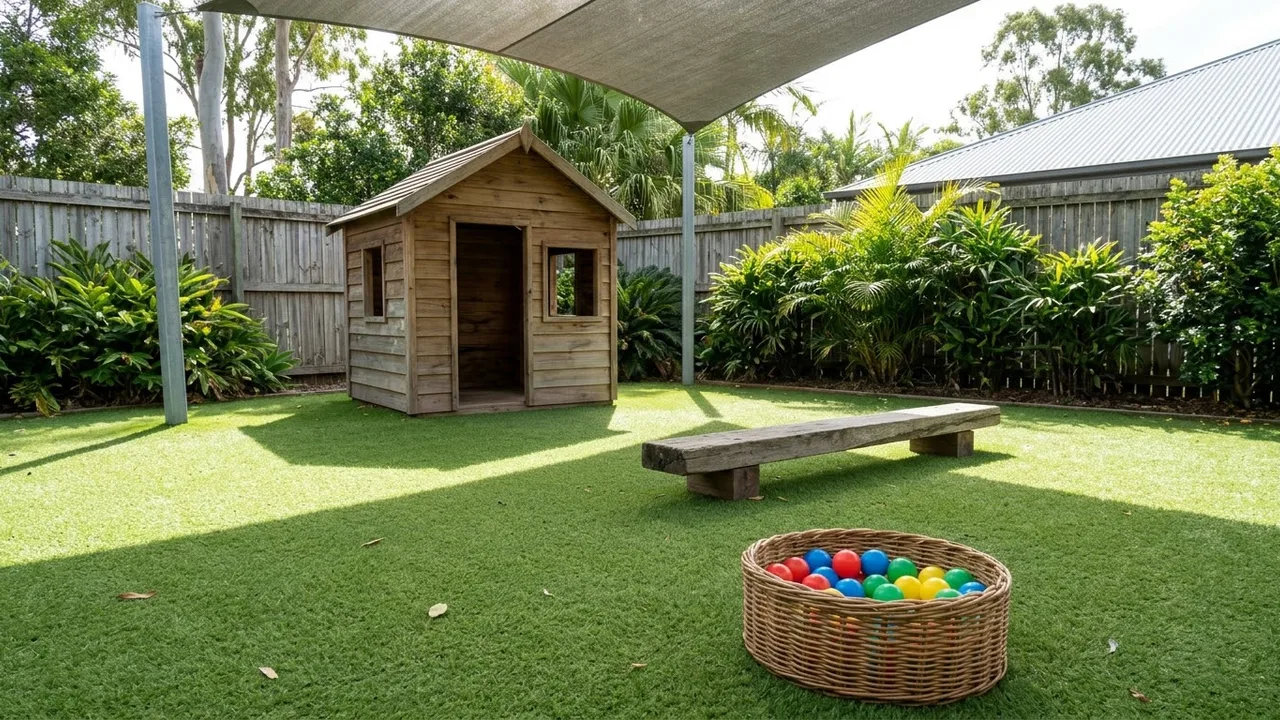
Playground artificial grass in Brisbane can be soft enough under play equipment when a suitable shock pad sits beneath it. A shock pad is a cushioning layer that soaks up some of the impact from a fall. Turf laid straight onto a hard, compacted base gives far less give, however soft the blades feel. For parents, schools and childcare centres, the goal is a surface children can use after rain without tracking dirt inside. That takes the padding, the drainage and the turf working together.
What is included
- Ground preparation Old grass, loose mulch and soft soil come out so the new surface has a firm, even footing that is less likely to sink.
- Drainage base A shaped and compacted base lets rain move away, which matters on heavy clay or a sloping inner Brisbane block.
- Shock pad under fall areas Padding sits where children can drop from swings, slides and climbing frames, with its thickness chosen for the height involved.
- Play-grade turf A dense, hard-wearing product stands up better to running feet and the scuffed patches at the foot of a slide.
- Edges, joins and infill Fixed borders and tight seams reduce lifting and trip points. Infill, the granules brushed between the blades, helps them stand where the product calls for it.
How it works
-
Measure the play space
Your installer measures the area, notes the height and position of each piece of equipment and looks at where water sits.
-
Quote the surface
Ask for a written price that sets out the turf, the base and drainage work, and the padded zones, so the scope is agreed before digging starts.
-
Build the base
Existing material is cleared, then the ground is graded and compacted to carry water away from the play area.
-
Lay padding and turf
Shock pad goes down under the fall zones, levels are blended at its edges, and the turf is rolled out, joined and fixed.
-
Finish and hand over
Infill is spread if the product needs it, the blades are brushed up and you walk over the surface together.
Playground artificial grass in Brisbane: what makes it soft
The padding underneath does most of the cushioning. Turf supplies the grassy feel and takes the wear, while the base below keeps everything level and drained.
The height a child can fall from guides how much padding is needed. A low toddler slide and a tall climbing tower call for different build-ups, so the installer needs to know what is going in. Equipment you plan to add later is worth mentioning too.
Padding also has to reach beyond the frame itself. Children jump, swing off and land further out than the footprint of the gear.
Do you need a shock pad under playground turf?
Yes, wherever a child could fall from height. Open running space with nothing to climb may not need the same layer, which can keep padding to the areas that call for it.
Schools and childcare centres usually have formal play safety obligations. The useful document is a test report showing the fall height reached by the exact pad and turf together. Whoever inspects your playground can say which standard it has to satisfy.
A product name on its own does not show how a finished surface handles a fall. The layers beneath it and the way they are installed count as well.
At home, the same thinking applies on a smaller scale. A swing set over thinly covered hard ground is the spot to deal with first.
Synthetic turf compared with woodchips and natural grass
Synthetic turf suits families who are tired of mud and loose material. Each surface asks for something different from you.
Woodchips or tanbark can cushion falls at enough depth, but they scatter, break down and need raking and topping up.
Natural grass feels cool and soft when healthy, yet it can wear to dirt under swings and struggle in shade.
Artificial turf stays green without mowing or watering, though it gets hot in direct sun and still needs brushing and rinsing.
If summer heat is your main worry, shade matters. A shade sail or an established tree over the busiest spot makes a noticeable difference, and a hand on the surface tells you if it is too warm for bare feet.
Play turf installation on clay, slopes and concrete
The subtropical climate in Brisbane brings heavy downpours, so water needs a clear way out. On clay, that usually means shaping the base and giving runoff somewhere to go. The installer confirms the fix after seeing how your yard falls.
Existing concrete can sometimes be covered, provided it is sound and sheds water. Padding over a slab does not mend ponding or cracked, lifting sections. Those need attention underneath.
Slopes beside a play area deserve thought as well. Soil washing down onto the turf can clog it and leave a slippery film.
What changes the price of a play area
Size is the obvious driver, but the padded zones and the ground below often matter just as much. Taller equipment generally needs a deeper cushioning system.
Removing old turf, mulch, rubber or concrete also moves the figure. So does narrow access that means barrowing materials by hand. Drainage work, retaining edges and cuts around posts add to the job too.
Play areas come in all shapes across Brisbane, from small inner-city yards in Spring Hill to bigger family blocks further out. For a play space, check the licence your installer quotes on the QBCC licensee register before work begins.
For your quote, type in the rough size of the space, the equipment and its height, what covers the ground now and where puddles form.
Play area and school turf options
- Backyard play areas Turf and padding around a swing set, cubby or trampoline at home, joined neatly to the rest of the yard.
- School playgrounds Hard-wearing synthetic surfaces for busy play and sports spaces, with padding under equipment where children can fall.
- Childcare outdoor spaces A green surface for crawling, running and group play that replaces bare dirt or scattered tanbark.
Play area and school turf across Brisbane
Frequently Asked Questions
Is playground turf safe for kids and the family dog?
When should a professional install turf for a large play area?
Can torn or lifting play area turf be repaired?
Get it priced
Patchy lawn, mud or dead grass after summer? Get a clear turf quote for your yard.
Tell us where the grass is going and get a price for your yard.