Commercial Artificial Grass in Brisbane
Business and common areas
Shared lawn worn to dirt? Commercial artificial grass in Brisbane gives busy ground a hard wearing green surface without the mowing.
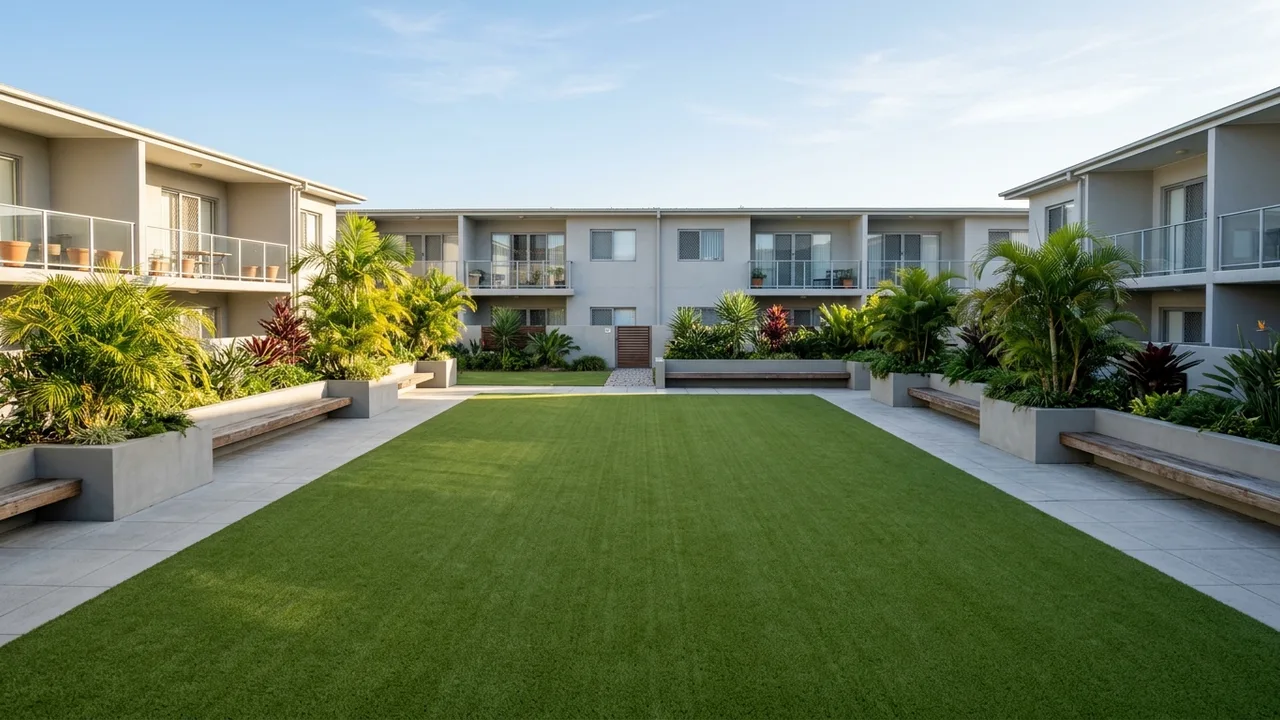
A turf installer who handles commercial work can lay synthetic turf across a shopfront, cafe courtyard or apartment common area. The job suits ground where people walk all day and living lawn keeps giving up. Good results come from matching the turf to the traffic and building a base that drains. You want a surface that stays flat and tidy, with one clear price for the agreed work before it starts.
What is included
- Site measure and levels The area, falls and access set how much material is needed and where rainwater has to go.
- Removal of the old surface Dead lawn, roots or tired turf left underneath can cause lumps and soft patches later.
- Base and drainage A compacted base shaped to shed water helps keep paths and seating areas flat after heavy rain.
- Turf selection Pile height, density and backing need to suit chair legs, trolleys, pets or children.
- Joins and edges Firmly fixed seams and borders lower the chance of lifted edges that catch a shoe.
How it works
-
Walk the site
Your installer measures the area and looks at drainage, access and trading hours. These shape both the price and how long the work takes.
-
Choose the turf and agree the price
Samples let you judge colour and feel by hand. The written price should also say whether lifting and disposing of the old surface is included.
-
Prepare the ground
Old material comes out, then the base is shaped and compacted. Over concrete, the work centres on drainage paths and any underlay.
-
Lay, join and fix
Rolls are laid with the pile running the same way, trimmed to the edges and joined. Infill (sand or granules brushed into the fibres) is added where the product calls for it.
-
Hand over the area
A walk through covers seams, edges and falls. You also learn what brushing and rinsing the surface will need.
Commercial artificial grass in Brisbane: where it suits
Busy, hard to mow ground is where commercial turf earns its place. Think of the strip outside a cafe that turns to mud, or a shaded body corporate courtyard where grass thins out every year. In inner Brisbane, hilly or heavy clay blocks also make drainage an early question for shared courtyards.
Offices and shops use it to cover plain concrete. Childcare centres and schools look at it for play spaces that can open again once rain has drained. Gyms and dog parks need tougher or faster draining products.
Sports use needs its own conversation. A football surface where FIFA ratings come into it is a very different job from landscaping a reception courtyard. Name any sporting body standard your club must meet at the start, because it affects both product and base.
Choosing synthetic turf for heavy foot traffic
Dense turf with a shorter, springy pile usually copes better with constant walking than long, soft styles. Long fibres look lush in a sample but tend to flatten along a regular path.
The backing matters too, since it holds the fibres and lets water through. Under cafe chairs or delivery trolleys, a firm base stops dents forming. Play areas may need a rubber or foam layer underneath to cushion falls, matched to the height of the equipment.
Sun is the other test in a subtropical climate. Synthetic fibres can get hot underfoot on a clear summer day, especially beside glass or pale walls that reflect light. A UV stabilised product is made to slow fading. Shade over seating and play zones helps with the heat.
Artificial turf or natural grass for a shared space
Artificial turf suits areas that must look presentable all year with no mowing or irrigation. That can appeal when water restrictions are in force or no one on site looks after a lawn.
Natural grass stays cooler and can repair itself after light wear. It struggles in deep shade and on paths that never get a rest. It also needs mowing, feeding and water.
Synthetic is not maintenance free. Leaves need clearing, high traffic lines need brushing, and food spills or pet areas need rinsing. For a sunny space with gentle use, living lawn may still be the better fit.
What drives the price of fake grass in Brisbane
Area and turf grade set the starting point, but the ground often decides the rest. Heavy clay, slopes and poor drainage call for more base work than a flat slab.
Access counts on commercial sites. Carrying base material through a lobby or up to a rooftop takes longer than tipping it beside the work area. Lots of curves, planter beds and posts also add cutting and joining.
Timing can matter as much as materials. Work staged around trading hours or residents may change the program and the cost. A written quote that lists turf, preparation, drainage and edging shows what you are paying for. If one figure is much lower than another, look at which of those items it covers.
Mistakes to avoid on a commercial turf installation
Laying new turf over a poor base is the costly one. Water pools, seams shift and the surface turns uneven, often where people walk most.
Picking by appearance alone causes trouble as well. A soft residential style can wear quickly at a busy entry. Drain points that end up buried, or runoff aimed at a doorway, are also hard to fix afterwards.
On shared property, settle who approves the work and who can use the area while it is closed. A short note on opening hours, access and daily use gives your installer a clear start. Include rough measurements and what covers the ground now in your quote request.
Commercial artificial grass options
- Retail and hospitality turf Green surfaces for shopfronts, outdoor dining and courtyards where furniture and foot traffic wear the same spots.
- Common area turf Shared lawns, walkways and rooftop spaces for apartment buildings, offices and managed properties.
- Childcare and school play areas Play turf that can sit over a cushioning layer, chosen around the equipment and how children use the space.
- Sports, gym and dog areas Denser turf for training strips and putting greens, or free draining turf for dog runs that need regular rinsing.
Commercial artificial grass across Brisbane
Frequently Asked Questions
What does a commercial synthetic turf installation cost in Brisbane?
How can a Queensland property manager find a turf contractor's licence details and spot a false claim?
Is my turf installer's QBCC licence genuine, and how can I tell?
Get it priced
Patchy lawn, mud or dead grass after summer? Get a clear turf quote for your yard.
Tell us where the grass is going and get a price for your yard.