Pool Surround Artificial Grass in Brisbane
Poolside turf
Mud, dead patches or hard paving beside the pool? Pool surround artificial grass in Brisbane gives wet feet a softer, greener place to land.
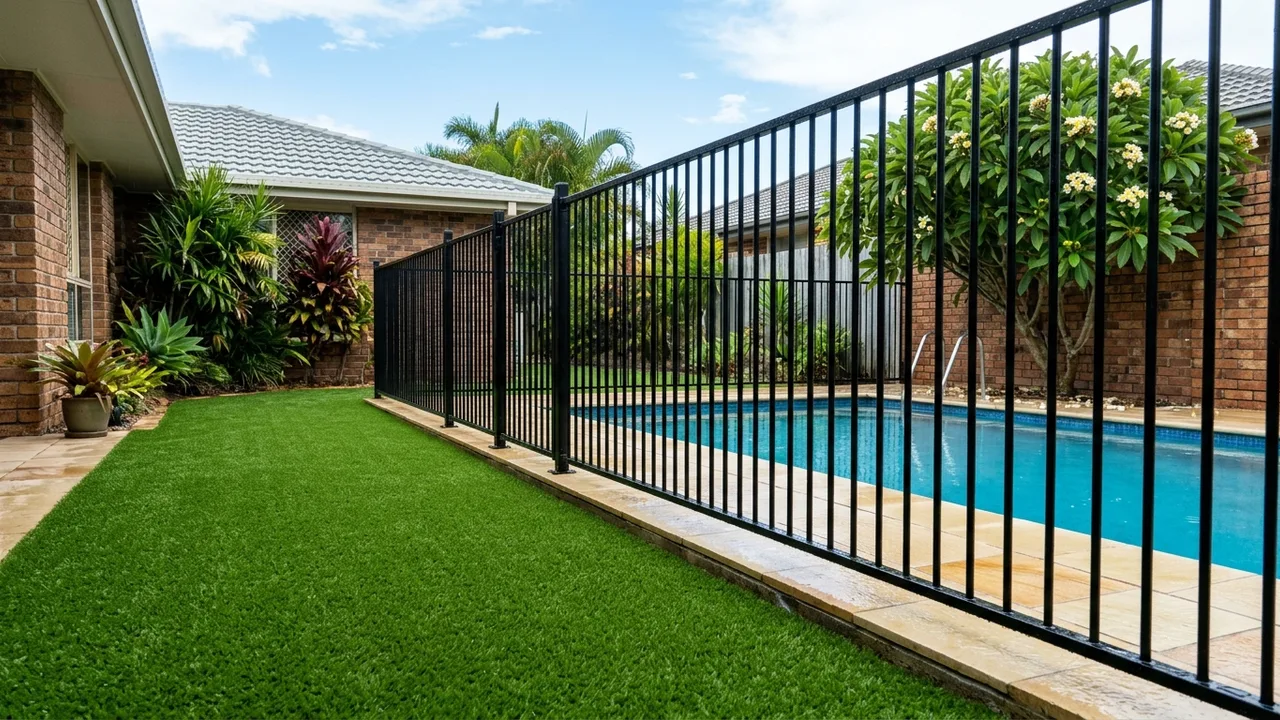
Artificial grass usually copes well with chlorine, splashing and wet feet, provided the product suits poolside use and the base drains. The weak points are heat in full sun and water trapped under a poorly built surface. For your Brisbane pool, a good result is a green edge that doesn't turn to mud. It should also stay flat where people climb out.
What is included
- Clearing the old surface Tired grass, roots and soft soil are removed so the new turf isn't sitting on material that sinks or rots.
- Compacted base with a fall Crushed rock is packed down and sloped so splash-out drains away and doesn't sit against the coping, the edge stones of the pool.
- Pool-suited turf Fibre, backing and pile height affect how the surface feels underfoot and how quickly it sheds water.
- Secured edges and joins Firm fixing along paving and coping stops lifted corners that catch toes.
- Infill choice Infill is the fine material brushed between the blades, and loose grains near a pool can end up in the filter.
How it works
-
Measure and look at drainage
The installer measures the area, checks which way water runs and notes the pool fence, gate, coping and filter equipment.
-
Choose the turf and quote
You pick a product for bare feet and sun exposure. Ask for a quote that sets out the turf, base preparation and drainage.
-
Prepare the base
Old material comes out, then the base is compacted and shaped to fall away from the pool. Over concrete, drainage underlay goes down instead.
-
Lay, join and fix
Turf is cut around curves, joined with the blades facing the same way and fixed at the edges.
-
Brush and finish
Any infill is spread, the pile is brushed up and loose offcuts are cleared before anyone swims. Fence clearances are measured again if ground levels changed.
Pool surround artificial grass in Brisbane: chlorine, salt and wet feet
Normal splash-out from a chlorine or salt pool is unlikely to break down good synthetic turf quickly. Most turf fibres are plastics that don't absorb much water. Your installer should still confirm the maker rates the product for poolside use.
Residue is the thing to manage. Salt and pool chemicals can dry on the blades and leave them feeling stiff or looking dull. A hose over the splash zone now and then rinses it through. Concentrated chlorine is different, so store and mix it well away from the surface.
A product name on its own won't tell you everything. Look for how the backing drains, how soft the blades feel and what the maker says about sun and pool water.
Water drainage and grip around the pool
The base decides whether splash water disappears or squelches underfoot. Turf backing lets water through, but it then needs somewhere to go.
Heavy clay holds water, and a sloping block can push runoff towards the pool. A shaped base of compacted rock deals with both, sometimes with a drain along the low side. The installer settles that after seeing how your yard falls.
On a hilly Paddington or Red Hill block, note where runoff from higher ground meets the pool paving. For any inner Brisbane yard, from New Farm to West End, side access width and clay soil are worth mentioning with your quote request.
Grip is generally good because the blades give wet feet some texture. No wet surface is slip-proof, so running by the pool still needs a firm no. Algae, sunscreen film and leaf litter can make turf slick, and regular brushing and rinsing help.
Synthetic turf in a subtropical climate: heat and fading
Synthetic grass gets hot in direct summer sun, often much warmer than living lawn. Test it with your hand before small children or dogs go on it. A quick hose cools it for a while.
Shade changes the picture. A sail or umbrella over the lounging spot helps, and some turf is made to reflect more heat. Ultraviolet (UV) stabilisers are additives that slow fading in a subtropical climate, so they matter in an open Brisbane yard.
Glass pool fencing and large windows deserve a look. Sunlight bouncing off them can concentrate on one strip and soften or flatten the fibres. Window film or a screen may stop it.
Artificial grass, pavers or natural grass beside the pool
Each surface suits a different pool, and the trade-off is mostly comfort against upkeep.
Artificial grass is soft and green with no mowing, but warm in full sun.
Pavers are hard wearing and easy to hose, though firm on knees and hot in some colours.
Natural grass is cooler underfoot, but splash-out, shade and heavy traffic can leave bare or muddy patches. Clippings also blow into the water.
Mixing them often works well. Pavers can take the entry steps and barbecue area while turf softens the spot where towels go. Curved edges, stepping stones through grass and a turfed strip along the fence are other ways to frame the pool.
What artificial turf installation costs around a pool
Turf on its own typically runs from $25 to $100 or more per square metre in Brisbane, depending on the product tier (November 2026). That range is supply only, so laying and base work are extra.
Pool areas can take more labour than an open rectangle. Curved coping means slower cutting, and narrow side access means material is moved by hand. Removing old concrete, fixing drainage or choosing a softer, denser product also lifts the total.
A useful quote lists the turf, base preparation and drainage separately enough for you to see what you're paying for. Ask for the licence number with your poolside quote and check it on the QBCC licensee register.
Muddy edges or worn turf around the pool? For your poolside quote, type the rough size of the area, what covers it now and where splash water collects.
Pool surround turf options
- Turf over existing concrete A drainage underlay can go over a sound slab that already sheds water, with low spots fixed first.
- Paver and turf strips Turf laid between large pavers breaks up hard surfaces while keeping a firm path to the pool gate.
- Replacing worn poolside turf Faded or uneven synthetic grass is lifted, the base is repaired and fresh turf is fitted.
- Patching heat damage A melted section is cut out and a matching piece is joined in from underneath.
Pool surround turf across Brisbane
Frequently Asked Questions
Will poolside artificial grass cost less to look after than a natural lawn?
What are the upsides and downsides of artificial grass around a pool?
How is burnt or melted artificial grass beside a pool repaired?
Get it priced
Patchy lawn, mud or dead grass after summer? Get a clear turf quote for your yard.
Tell us where the grass is going and get a price for your yard.