
Fake Grass in West End: Turf Laid on a Proper Base
Tired of mud or a patchy lawn? Fake grass in West End starts with a firm, draining base and a quote for your yard.
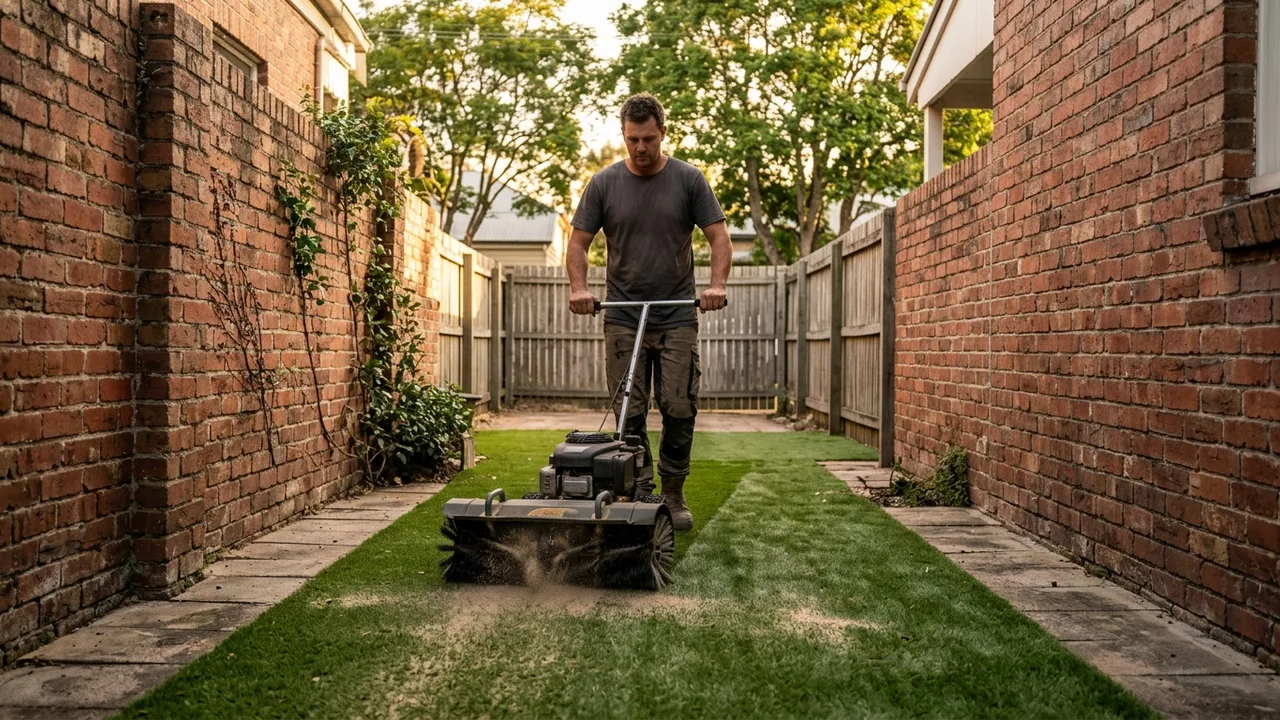
If your back lawn turns to mud or has gone patchy, a lasting fix starts underneath with a base that drains. Fake grass in West End shouldn't go over loose soil, so the ground is cleared, shaped to shed water and compacted before any turf is rolled out. Done that way, you get a green yard without mowing or watering. The dog has somewhere to run that isn't a mud patch, and the kids can head back outside once the rain has drained off.
Fake grass in West End, Brisbane: what sits under the turf
A lasting job is built in layers, and the turf is only the top one. Your installer starts by lifting the old lawn, roots and soft topsoil. Anything left to rot underneath can leave hollows later.
Next comes the base, usually crushed rock spread and compacted with a machine. A thin layer of fine material goes over it to smooth out small bumps. This is what keeps the surface from rippling when people walk on it.
Weed matting may be added where weeds are likely to push through. The turf is then cut to shape, joined with seam tape and glue, and fixed around the edges.
Sand or another infill is often brushed in at the end. Infill is the loose material between the blades that adds weight and helps them stand up. The right depth and type depend on the turf you pick and how the yard gets used.
Edges deserve a close look too. A timber, metal or concrete border gives the turf something firm to finish against, especially beside garden beds and paths.
Will it drain on clay, a slope or old concrete?
It can drain well, provided the water has somewhere to go. Turf backing lets rain through, but heavy clay underneath soaks it up slowly. If water already pools after a storm, the installer needs to deal with that before the new surface covers it.
The usual answers are a gentle fall across the base, a free-draining rock layer or an added drain at the low point. A sloping yard may also need edging that stops the base creeping downhill. Your installer confirms the cause on site.
Bare concrete is a different job. Turf can often be laid over a sound slab, with a drainage mat or underlay so water can escape. Cracks, low spots and the direction of fall all matter, because a puddle on the slab will still be a puddle under the grass.
Which turf suits pets, play, pools or putting?
Start with how the yard gets used, because that narrows the choice quickly. Each use puts a different strain on the surface.
For dogs, quick drainage underneath and a surface that rinses clean help with smells. Where kids play, a soft underlay can cushion areas around swings and other equipment.
Turf around a pool needs to cope with splashes and wet feet. A putting green calls for short, dense turf and careful shaping, which affect how the ball rolls.
Sun matters as well. Synthetic turf gets hotter than natural grass in direct summer sun, so shade or a rinse with the hose can make a play spot more comfortable. UV-stabilised products are made to slow fading, and any warranty on the turf should be in writing.
A sample in your hand tells you more than a photo. Look at pile height (the length of the blades), how dense it feels and how it springs back.
What does a turf quote cover?
A clear quote sets out the turf, base preparation and drainage, so you can see the full price for the agreed job before work starts. Removal of the old lawn or faded turf, edging and infill belong on it too.
Cost mainly turns on the area, how much material has to be dug out and carted away, and how hard it is to get it to the street. Curved edges, extra joins and drainage work add labour. A higher grade of turf changes the figure as well.
Doing it yourself can work on a small, flat, easy spot. Compacting the base and hiding the seams are the parts that are harder to get right. Ask for a QBCC licence number with your quote and match it to the business name on the QBCC licensee register.
West End yards, access and ground
Behind a West End Queenslander, getting soil out and rock in can be the hard part. A narrow side path or steps may mean moving it all by barrow. Runoff from under the house and around stumps also needs thought, so the new base doesn't push water towards them.
In West End apartments, courtyards and rooftop areas may sit on concrete. Drain outlets need to stay open and reachable, and the body corporate may have a say before anything is changed. If you live near Boundary Street, the main commercial strip among homes and small businesses, think about where a truck can stop to unload rock and turf.
This walkable pocket south of the Brisbane River, at the western end of the peninsula, is known locally as Kurilpa and has leafy riverside reserves. European settlers once farmed its fertile soil and planted orchards. Your yard today may hold rich topsoil, clay or old fill, and digging shows what has to come out before the base goes in.
For a yard near Davies Park, Musgrave Park or Kurilpa Library, a price starts with a few details you can type in. Say how big the area is, what's on it now, where water sits after rain and how wide the way in is. Then request your quote for artificial grass in West End 4101.
Services in West End
- Artificial turf supply Synthetic turf bought by the roll for DIY lawns, with pile, backing and joins to weigh up for your yard.
- Lawn replacement with artificial grass Patchy lawn lifted, the ground dug and compacted, then synthetic turf cut, joined and pinned in place.
- Pet-friendly artificial grass Pet turf over a free-draining base, with infill and cleaning habits that help keep odour and mud down.
- Pool surround turf A soft poolside edge in synthetic turf, laid on a draining base to handle splashing and wet feet.
- Putting greens and mini golf A putting surface fitted to your yard, with shaped contours, a firm draining base and no grass to mow.
- Play area and school turf Play turf for backyards, schools and childcare, with a shock pad under swings and climbing gear.
- Artificial grass on concrete Concrete patios, courtyards and balconies covered in turf that drains with the slab and stays fixed flat.
- Commercial artificial grass Hard wearing synthetic turf for shopfronts, cafe courtyards and shared areas that take steady foot traffic.
Frequently Asked Questions
Can artificial grass go straight over the soil in my West End yard?
Get it priced
Patchy lawn, mud or dead grass after summer? Get a clear turf quote for your yard.
Tell us where the grass is going and get a price for your yard.